Pay in installments of $5.85 with
 ,
,
 and
and

Shipping Estimate
USA
- USA
- CAN
- USA
- CAN
Ships within 48 hours · Estimated delivery Jun 30 - Jul 5
 Promo Codes Available:
For Your Every Summer RSVP, with Code: SUMMER15
Description
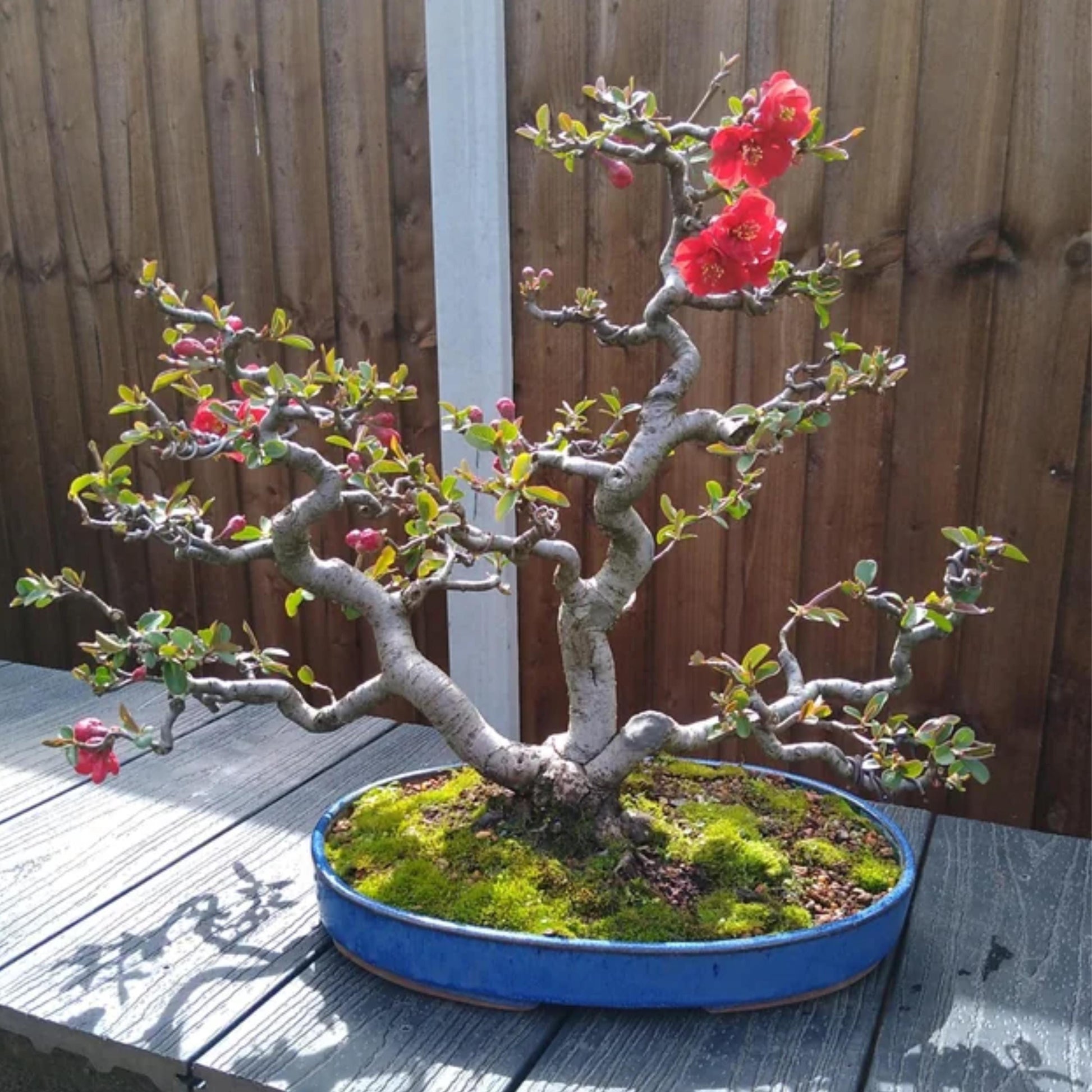
quince bonsai tree Chinese Quince Tree SeedsAncient fruit. Extraordinary fragrance. The original quince. Chaenomeles sinensis, the Chinese Quince, is the true quince of East Asian garden tradition, a slow growing ornamental and fruiting tree native to China that produces large, aromatic, apple like fruits with a fragrance so intense and persistent that a single ripe fruit placed in a room will scent the entire space for weeks. The bark is among the most ornamentally interesting of any flowering
Ancient fruit. Extraordinary fragrance. The original quince.
Chaenomeles sinensis, the Chinese Quince, is the true quince of East Asian garden tradition, a slow-growing ornamental and fruiting tree native to China that produces large, aromatic, apple-like fruits with a fragrance so intense and persistent that a single ripe fruit placed in a room will scent the entire space for weeks. The bark is among the most ornamentally interesting of any flowering tree, peeling in irregular patches of gray, green, brown, and orange in a mosaic pattern comparable to the finest ornamental cherries. The white to pale pink flowers appear in spring before the leaves and the fruit, which cannot be eaten raw due to extreme astringency, is made into preserves, liqueurs, and medicinal preparations across China, Japan, and Korea. If you are looking to buy Chinese Quince seeds or grow this ancient ornamental from seed, this is the quince with the most complete combination of bark, flower, fruit, and fragrance of any quince species in cultivation.
- Extraordinarily fragrant fruit placed in a room will scent it for weeks, one of the strongest natural fruit fragrances available
- Beautiful mottled exfoliating bark in gray, green, brown, and orange, ornamental in every season
- White to pale pink flowers in spring before leaf emergence, delicate and refined
- Slow-growing and long-lived, developing extraordinary character and bark texture over decades
- Used in traditional Chinese, Japanese, and Korean medicine and cuisine for centuries
Things you probably did not know about the Chinese Quince
The fragrance is used in traditional Japanese rooms as a natural air freshener. In Japan the Chinese Quince, called karin, has been placed in tokonoma alcoves, clothing chests, and living rooms specifically for its fragrance for centuries. A single ripe fruit can maintain its scent for months after harvest, making it one of the most persistent natural fragrances available from any plant. The scent is a complex combination of floral, honey, and spice notes that intensifies as the fruit ripens.
The fruit requires cooking but produces extraordinary preserves. Raw Chinese Quince is so astringent it is essentially inedible due to high tannin content. However, when cooked with sugar the tannins break down and the fruit produces deep rose-pink to ruby-red preserves and jellies with a flavor considered among the finest of any temperate fruit preserve. The pink color develops through a chemical reaction between the fruit's polyphenols and heat, the same process that gives quince paste its characteristic color.
The wood is extremely dense and was used for wooden clogs in East Asia. Chinese Quince wood is exceptionally hard and dense, close-grained and resistant to wear. In traditional East Asian craft it was used for furniture, tool handles, and wooden footwear because the extreme hardness made it durable in applications that softer woods could not withstand. The weight and density of the wood is immediately apparent when handling even small pieces.
It is closely related to but distinctly different from the Japanese Flowering Quince. The Japanese Flowering Quince, Chaenomeles speciosa, is far more commonly grown in western gardens as an ornamental. The Chinese Quince is a different species, growing into a true tree form rather than the shrub of the Japanese species, and producing much larger fruit with a more intense fragrance. The two plants are frequently confused in catalogs and nursery trade.
Growing Details
- Botanical Name: Chaenomeles sinensis
- Stratification: Required, 60 to 90 days cold stratification
- USDA Zones: 5 to 9
- Soil: Well-drained, slightly acidic to neutral, moderately fertile
- Light: Full sun to partial shade
- Height: 15 to 25 feet
- Spread: 10 to 18 feet
- Growth Rate: Slow, 6 to 12 inches per year
Plant it where the bark will be visible in winter and the fruit accessible in fall. Put one ripe fruit in a bowl inside and leave it there for a month. Then you will understand why this tree has been cultivated for 3,000 years.
Shipping Notes
- Free Standard Shipping on $100+ Orders to the USA.
- Except Preorder products are shipped in 48 hours.
- Delivery to the USA:
- Standard Shipping : 3-10 business days
- If time is of the essence, please consider selecting expedited delivery for faster service.
Exchange/Return Notes
- We offer a 30-day return/exchange service after receiving.
- Final sale items are not eligible for returns or exchanges.
- To process your return/exchange, please contact us at [email protected]
- Please click here for more details>>> Return & Exchange Policy